Design System Governance at Enterprise Scale: Semantic Versioning, Component Deprecation, and Multi-Brand Adaptation

Building a design system component library is relatively straightforward; governing and sustaining that system across hundreds of product designers, thousands of engineers, and multiple autonomous business units over several years is one of the most formidable challenges in modern digital product architecture. Without disciplined governance protocols, design systems inevitably fracture into rogue forks, uncoordinated overrides, … Read more
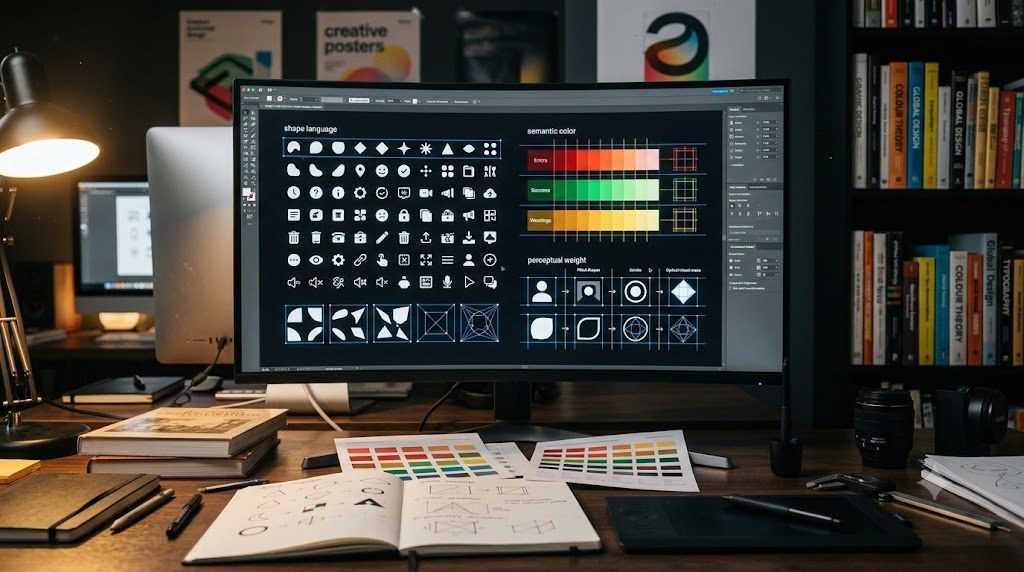
Engineering Cohesive Visual Grammars: Shape Language, Semantic Color, and Perceptual Weight

Why do certain digital products and consumer brands feel instantly cohesive, authoritative, and polished, while others appear disjointed and amateurish despite using high-quality individual assets? The differentiator is the presence of an underlying visual grammar. Just as a spoken language relies on syntax, phonology, and semantic rules to transform random words into meaningful literature, a … Read more

Enterprise Design Token Architecture: Atomic Design Methodology and Cross-Platform Tokens

As software organizations scale across multiple digital platforms—spanning web applications, native iOS apps, Android clients, and embedded automotive touchscreens—maintaining visual consistency through manual styling becomes an operational impossibility. Hardcoded hex codes, scattered CSS classes, and fragmented design files inevitably produce visual drift, accessibility regressions, and hundreds of hours of wasteful duplicate engineering. The enterprise solution … Read more

Modular Grid Systems and Swiss International Typographic Style: Mathematical Proportions and Rhythm

Modern digital design systems—from responsive CSS flexbox and grid layouts to enterprise UI component libraries—are the direct descendants of the Swiss International Typographic Style developed in Zurich and Basel during the 1950s. Designers such as Josef Mller-Brockmann, Armin Hofmann, Karl Gerstner, and Emil Ruder discarded arbitrary personal decoration in favor of a universal, objective visual … Read more